
Use case
Remote Water Leak Monitoring for Construction Sites, Apartments and HOAs
Most water damage is not caused by a big leak. It is caused by an ordinary leak that nobody saw for twelve hours. Here is what that costs, worked out step by step, and how to get a leak alert to the person who can shut the water off.
VuePoint
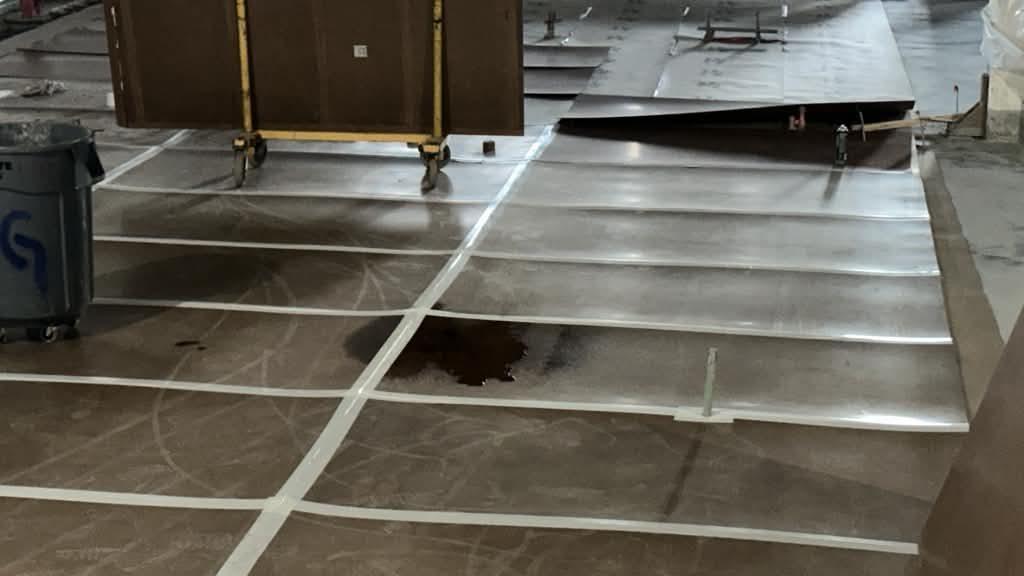
An undetected water leak is the most expensive ordinary event in a building. The water itself costs almost nothing. The damage scales with one variable: how long it runs before someone with a shut-off key knows about it. A leak caught in 15 minutes is a mop and a work order. The same leak found at 6:30 the next morning is a mitigation contractor, an insurance claim and, on a job site, a schedule slip. The fix is not exotic: put leak sensors where water starts, cameras where water collects, and route both to someone who is awake.
A real one: water on a deck, found on the morning round
Early one morning on a mid-rise construction project in San Francisco, a security officer walking the site found water pooling on a parking-ramp level. The photo above is what they saw: a dark stain spreading under the protection board laid over finished concrete. The project team received a written report with the photo.
That is a good outcome, and it was caught because a person happened to walk past at 6:42 a.m. The question nobody could answer from the photo is the one that decides the cost: when did it start? If the answer is 2 a.m., that is a few hours of water. If it is Friday evening, it is a weekend's worth, working its way through penetrations to the level below. A walk-through finds a leak once per round. Sensors and cameras can report it when it starts.
Who gets hurt, and how
- Construction sites. Temporary water lines, test-pressurized risers, roof drains that are not connected yet, and open hose bibs left on after the last crew leaves. The building is full of materials that cannot get wet: drywall, insulation, finished flooring, elevator pits, electrical gear. Nobody is on site from evening to morning, and nobody at all over a weekend. Builder's risk policies often carry a separate, higher deductible for water, so many losses are paid by the general contractor or a subcontractor, not the insurer.
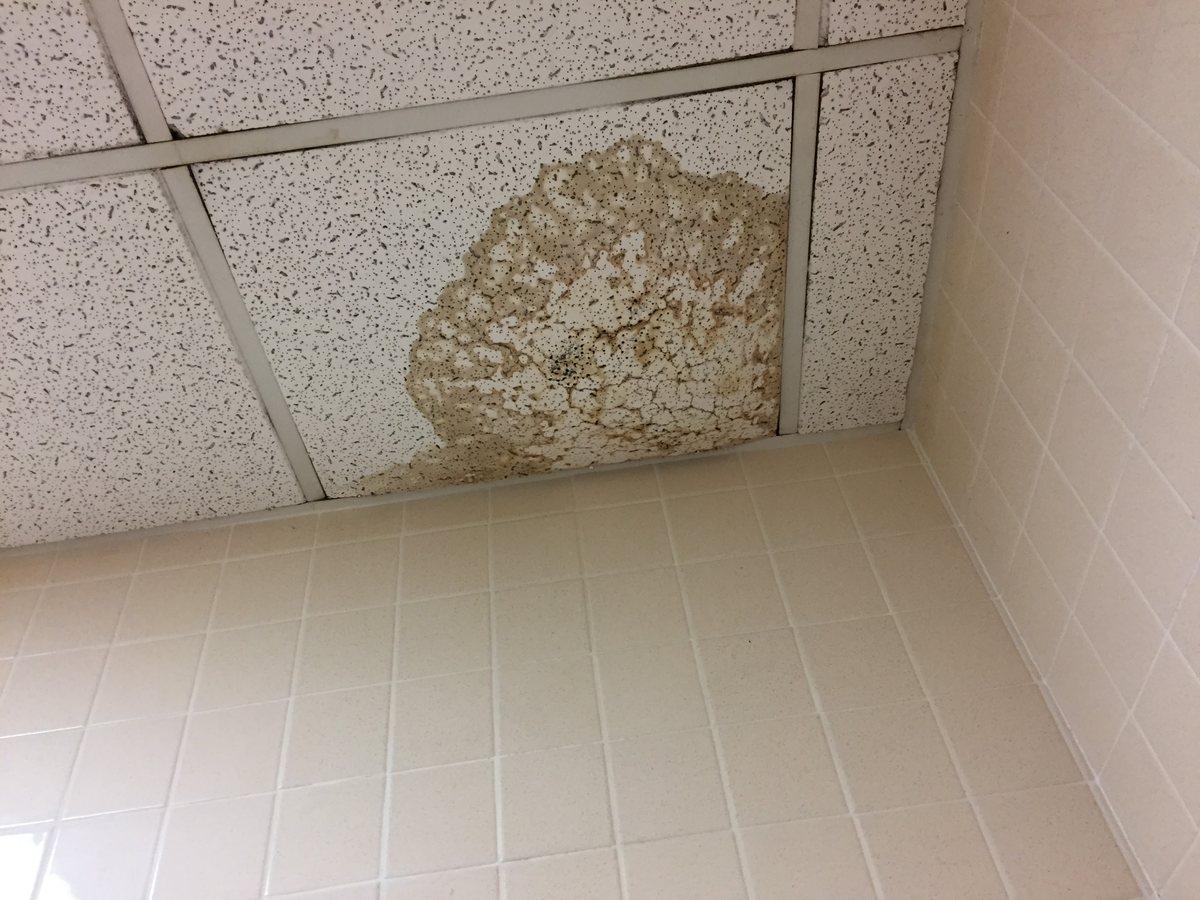
- Apartment buildings. Supply lines to toilets and washing machines, water heaters, and fire sprinkler heads. Water travels down. A leak in one unit becomes damage in two or three units below, displaced residents, and units that cannot be rented while they dry out.
- HOAs and condominiums. Same building physics, more complicated money. Who pays depends on the CC&Rs, the master policy and its deductible, and the owner's own policy. Common-area leaks (garage drains, irrigation mains, pump rooms, roof decks) are entirely the association's. Disputes about which unit started it can cost as much as the repair.
What a water leak costs: three worked examples
Below are three simple cost models, one for each kind of property. Each one has two kinds of number. Published figures come from a named source. Assumptions are our planning inputs, labeled as assumptions, and you should replace them with your own building's numbers. The point is the method: find out what your number actually depends on.
Published figures we use
| Figure | Value | Source |
|---|---|---|
| Average water damage and freezing claim (homeowners) | $15,400 | Insurance Information Institute, 2019–2023 weighted average |
| Water damage and freezing claim frequency | 1.50 claims per 100 insured homes per year (about 1 in 60) | Insurance Information Institute |
| Share of homeowners losses from water damage and freezing | 22.6% in 2023; between 19.8% and 28.7% each year 2019–2023 | Insurance Information Institute |
| Water wasted by household leaks nationally | Nearly 1 trillion gallons a year | U.S. EPA WaterSense |
| Homes with leaks wasting 50+ gallons a day | 9% | U.S. EPA WaterSense |
The insurer figures are for single homes, so they understate multifamily losses, where one leak reaches several units. We use them as a per-unit starting point.
Example 1: Construction site, 5 gallons a minute
Method. Gallons released = flow rate × minutes undetected. Cost = (area affected × (drying + rework cost per square foot)) + (schedule days lost × daily general conditions). Assumptions: a 5 gpm leak (a failed fitting or an open temporary hose bib; an open 3/4-inch line can run much faster); drying at $4 per sq ft; rework of installed drywall, insulation and flooring at $12 per sq ft; general conditions of $8,000 per day; water and sewer at $20 per 748 gallons (one billing unit). The area wetted for each case is also an assumption: it depends on slab slope, penetrations and what is installed.
| Time undetected | Gallons released | Water bill | Area affected (assumed) | Drying + rework | Schedule (assumed) | Total |
|---|---|---|---|---|---|---|
| 15 minutes (alert and call-out) | 75 | $2 | 100 sq ft | $1,600 | 0 days | about $1,600 |
| 12 hours (6 p.m. to 6 a.m.) | 3,600 | $96 | 2,000 sq ft | $32,000 | 3 days = $24,000 | about $56,000 |
| 60 hours (Friday 6 p.m. to Monday 6 a.m.) | 18,000 | $481 | 8,000 sq ft | $128,000 | 10 days = $80,000 | about $208,000 |
Two things stand out. The water bill is a rounding error, so a water bill is not the alarm that tells you something is wrong. And everything that matters grows with hours, not with the size of the leak. Then compare the totals to your builder's risk water deductible: if that deductible is $25,000 or more, the overnight case is mostly yours and the 15-minute case never becomes a claim.
Example 2: 100-unit apartment building
Method, part one: expected yearly cost. Units × claim frequency × average claim. 100 units × 1.50 per 100 units × $15,400 = about $23,100 a year in expected water losses, using the published homeowners figures as a proxy.
Method, part two: one stacked leak. A toilet supply line fails on the fourth floor overnight and reaches two units below. Repair, using the published average per unit: 3 units × $15,400 = $46,200. Assumptions: two households displaced for 14 nights at $200 a night = $5,600; three units off the market for one month at $3,000 rent = $9,000. Total: about $60,800, before the deductible and before any dispute over which unit is responsible.
Example 3: HOA common areas and the deductible
Method. Compare the typical loss to the master policy's water deductible. Assumption: a $25,000 water deductible (check yours; they vary widely). The published average water claim is $15,400. So the typical water loss in a single unit can fall entirely below the deductible and land on the association or the owner, depending on the CC&Rs.
Common areas add leaks no resident will report. Assumption: an irrigation main breaks at 10 p.m. and runs at 20 gpm until the landscaper arrives at 6 a.m. That is 9,600 gallons, about $257 at $20 per billing unit. The water is cheap. The undermined walkway, the flooded garage stairwell and the elevator pit pump are not.
How remote monitoring sees water
Two different tools do two different jobs. Be suspicious of anyone who sells one as the other.
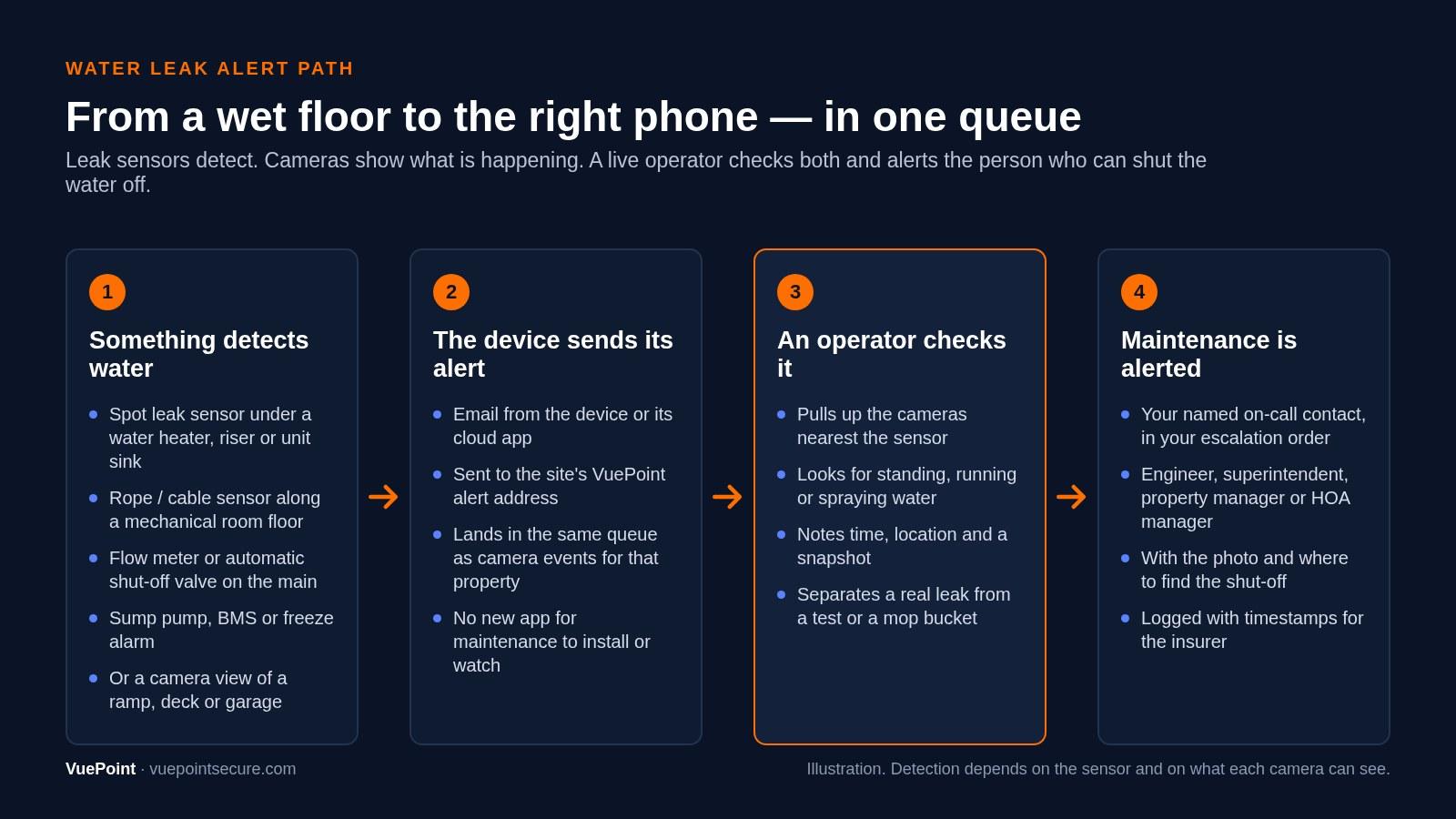
- Leak sensors detect water. A spot sensor under a water heater, a rope sensor along a mechanical-room floor, a flow meter or automatic shut-off valve on the main, a sump pump or freeze alarm. They are cheap and specific, but they only know about the few square inches they sit on, and on their own they send an alert to an app that someone may not be watching at 2 a.m.
- Cameras see where water goes. A camera cannot see inside a wall. It can see standing, running or spraying water in anything it covers: parking ramps, decks, garage floors, stairwells, loading docks, pump rooms and roofs under construction. That is exactly where water ends up and where nobody looks at night.
- A live operator connects the two. When a sensor fires, the operator pulls up the cameras nearest to it, looks for water, and either alerts your maintenance contact with a snapshot and location or notes it as a false alarm (a test button, a mop bucket). When an operator reviewing a camera sees water where it should not be, the same alert goes out without any sensor.
VuePoint as the switchboard for leak alerts
Most buildings already have something that can detect water. Its alerts go to an app on a property manager's phone, to an engineer who left at five, or to an inbox nobody reads at night. The detection is already there. The problem is where the alert goes.
Each property VuePoint monitors has its own alert email address. Any leak sensor, shut-off valve, sump pump controller or building management system that can send an email alert can be pointed at it. Those alerts land in the same queue as the camera events for that property, where a live operator checks the nearest cameras and alerts your named contacts in the order you set. One escalation list for intruders and for water, instead of one app per device.
This works with the devices and the cameras you already own. You do not need to replace a sensor system that works. You need its alerts to reach a person who will act on them.
How to set up water leak alerts for a building or job site
- 1
List where water starts
Water heaters, risers, supply lines, mechanical rooms, roof drains, temporary water connections and anything that was pressure-tested this week. Put a spot or rope sensor at each one.
- 2
List where water ends up
Low points: ramps, garage floors, elevator pits, stairwells, lowest finished floor, decks under construction. Make sure a camera covers each one, with enough light to see water at night.
- 3
Route every alert to one place
Set each device to send email alerts to your monitoring alert address instead of, or as well as, a phone app. Test each one by triggering it and confirming the alert arrived.
- 4
Write a short escalation list
Who gets called first for water, second if they do not answer, and who is allowed to shut off the main. Include where the shut-off valves are, with photos.
- 5
Keep the log
Keep the timestamped record of when the alert came in, who was told and when the water was shut off. Builder's risk carriers and HOA boards will ask for it.
On a job site, this fits into the same monitoring that covers after-hours trespass and theft. On a residential property, it covers the garages and common areas that apartment and HOA camera systems already watch.
Common questions
- Can security cameras detect water leaks?
- Cameras can show standing, running or spraying water in areas they cover, such as ramps, garages, decks and stairwells, but they cannot see inside walls or under floors. The reliable setup is leak sensors where water starts and cameras where water collects, with a live operator checking the camera when a sensor fires.
- What does an undetected water leak cost?
- The cost depends mostly on how long it runs, not on the water bill. The Insurance Information Institute puts the average homeowners water damage and freezing claim at $15,400 (2019–2023). Our worked example for a 5 gpm leak on a construction site comes to about $1,600 if caught in 15 minutes and about $56,000 if found the next morning, using assumptions you should replace with your own.
- Can VuePoint receive alerts from leak sensors we already have?
- Yes, if the device or its app can send an email alert. Each monitored property has its own alert email address; leak alerts sent there go into the same operator queue as camera events, and the operator alerts your named maintenance contacts.
- Who pays for water damage in an HOA?
- It depends on the CC&Rs, the master policy and its water deductible, and the unit owner's own policy. Because the average water claim can be below a master policy deductible, many losses are paid by the association or the owner, so a timestamped record of where the leak started matters.
- Do builder's risk insurers require a water damage prevention plan?
- Many builder's risk carriers ask for a written water damage prevention plan on larger projects, and some set a higher deductible for water losses. Leak sensors on temporary water, cameras on low points, and a logged after-hours alert path are the parts of that plan that work when no one is on site.
Already have leak sensors?
Tell us what devices the building has and where the low points are. We will show you how their alerts and your cameras can go to one queue, with your maintenance contacts at the end of it.